
Epic Ecuador & the Galápagos: A journey beyond expectations
Updated: Feb 27
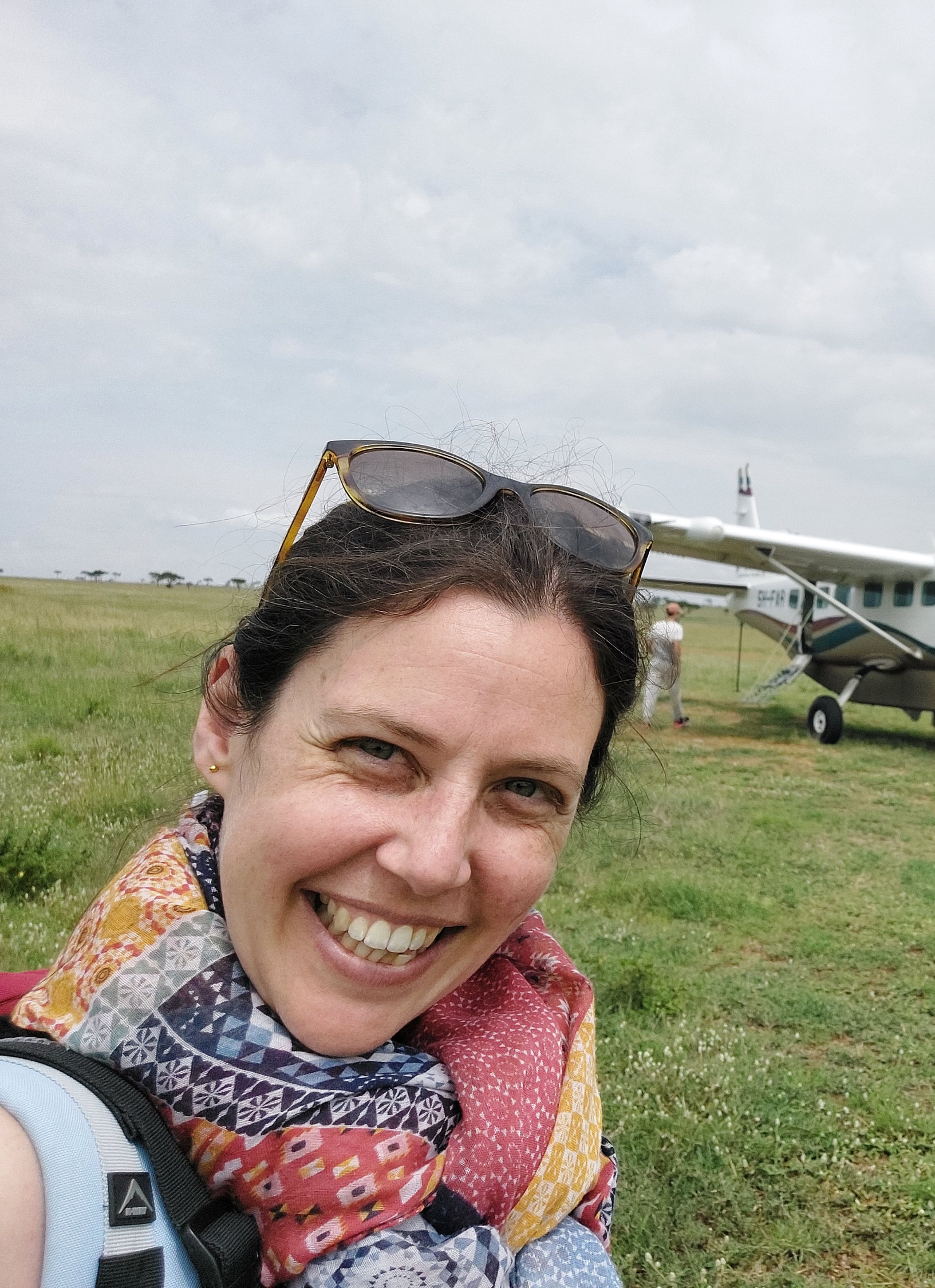
After an unforgettable adventure through Ecuador and the Galápagos Islands, our Representation Manager, Sarah, shares her experience of a destination that exceeded every expectation - where nature takes centre stage and ancient traditions thrive alongside incredible conservation efforts, all expertly crafted by Andean Travel Company.
Like many people, the Galápagos had long been on my bucket list. Mainland Ecuador, however, I’d thought of merely as a gateway to those legendary islands. How wonderfully wrong I was! This trip turned out to be so much more than I'd imagined, beginning the moment we touched down in Quito.
A capital like no other
Perched at 2,850 metres above sea level, Quito is the highest capital city in the world. What struck me first was its cleanliness and pride. It had polished streets, beautifully preserved colonial architecture and an energy that felt both vibrant and authentic. The UNESCO-listed historic centre is a masterpiece of cobbled lanes, baroque churches and bustling plazas.
That afternoon brought our first cultural immersion: a performance by the Andean Ballet! This wasn't your typical dance performance. It was a celebration of indigenous culture through movement, music and colour that told stories of the mountains, the harvests and the traditions that have survived centuries. The dancers' elaborate costumes, the haunting music of traditional instruments, the passion in every movement… It was spellbinding.
We then visited Kotea Organic Tea for a hands-on tasting and blending session. Learning about Ecuador’s unique growing conditions, crafting our own infusions and sampling the results was both calming and fascinating - a perfect introduction to the country’s rich natural heritage.
Standing between two hemispheres

The next day brought one of those travel moments that sounds like it should be touristy but turned out to be genuinely fascinating – visiting the Middle of the World. At the Inti Ñan Solar Museum, we experienced the peculiar physics of the equator. Watching water swirl in opposite directions just metres apart, balancing an egg on a nail (which apparently only works at 0° latitude), and literally standing with one foot in each hemisphere - it was playful science that had us all grinning like school kids.
Our guide Brandon was an absolute gem - enthusiastic and knowledgeable, answering all our questions with infectious passion. At some point, someone in our group asked him about the infamous "pee fish" – the candiru of the Amazon. What followed was possibly the most hilarious and unforgettable explanation I've ever heard. I won't spoil the details here (some things are better experienced in person!), but let's just say it's a story I'll never forget and Brandon's delivery made it legendary.
But it was the Casa Agave experience that truly immersed us in Ecuadorian culture. Set against the dramatic backdrop of the Andes, we wandered through agave fields learning about this remarkable plant's role in Ecuadorian history. Watching the traditional harvesting methods, understanding the fermentation process and finally tasting mishki (a traditional agave spirit) paired with local delicacies felt like being welcomed into someone's home.
The beating heart of indigenous culture
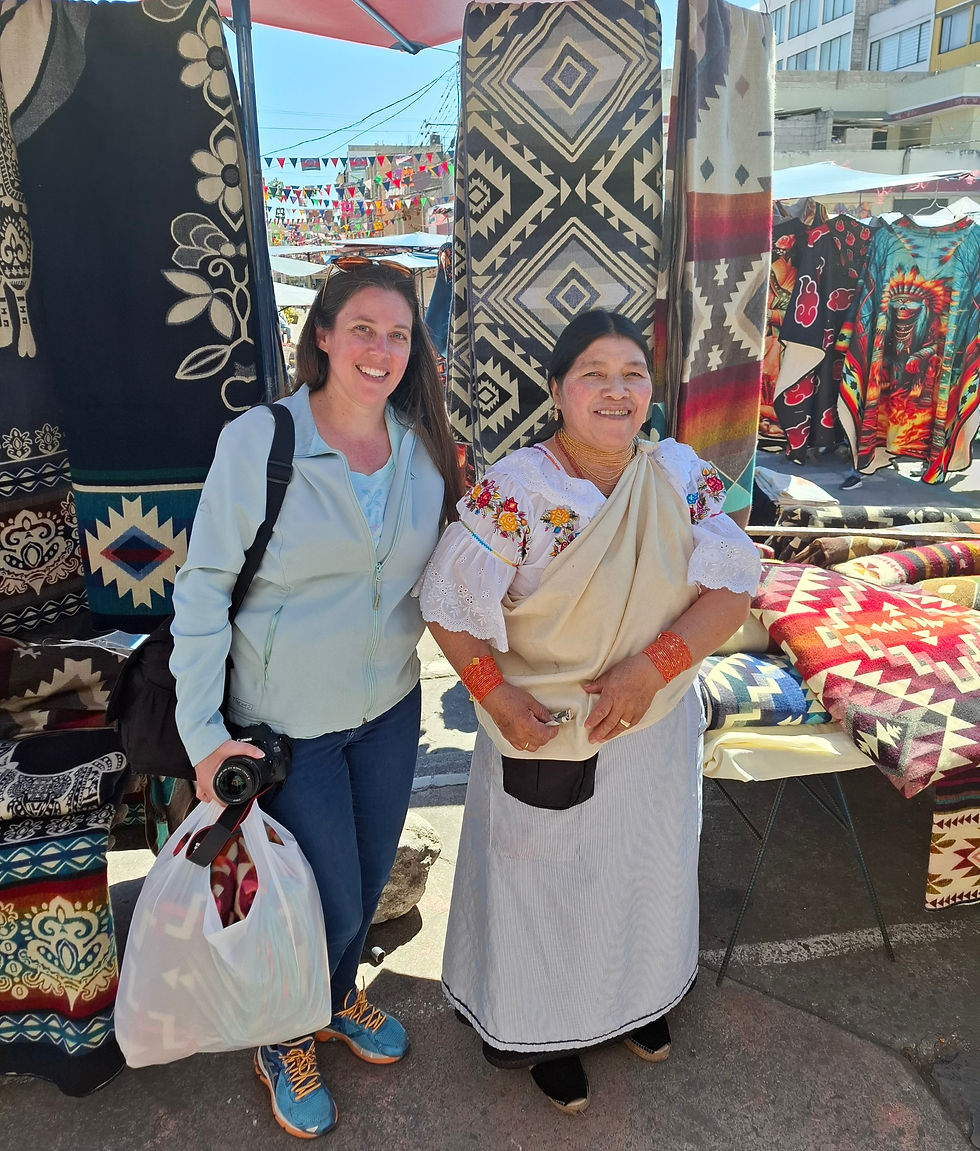
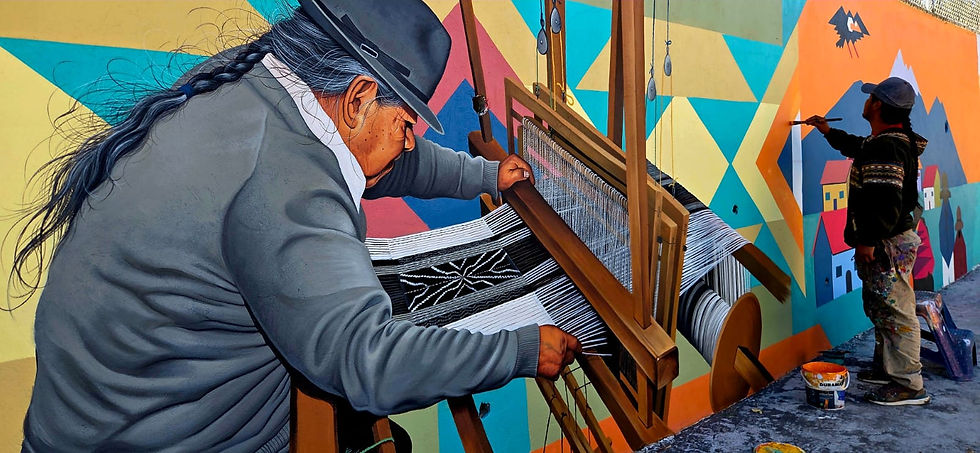
Otavalo, beneath the imposing Imbabura volcano, is far more than a market town. Its famous market is a centuries-old celebration of Andean craftsmanship: vibrant textiles, handwoven ponchos, intricate alpaca knitwear, all created using ancestral techniques.
The animal market was equally powerful. I wasn't quite sure what to expect, but watching local farmers trade livestock in the same way their ancestors have for generations was strangely moving.
A particularly moving moment came at the home of Taita Gundo, a revered maestro of Andean music, particularly the rondador (a small panpipe with the most hauntingly beautiful tone). Listening to him play and explain the significance of this music in Ecuadorian Andean culture was one of those intimate moments that makes you fall in love with a place.
Later, we stopped at the sacred Peguche waterfalls, a 20-metre cascade considered sacred by local communities, and I understood why. There's something deeply spiritual about the place.
Overall, throughout mainland Ecuador, it was the warmth of the people that stood out most. Whether it was a restaurant owner in Quito, an artisan in Otavalo, or our guides, there was a pride in their country and a generosity of spirit that made us feel not just welcome, but genuinely valued.
Entering another world

Then came the flight to the Galápagos, and everything changed.
From the moment we landed and went through the careful biosecurity checks (ensuring no foreign species are introduced to these precious islands), you sense you're entering somewhere extraordinary.
But nothing quite prepared us for the welcome committee of wildlife!
As we made our way through town, there they were: sea lions. Not in an enclosure, not behind barriers, but casually lounging on the streets and piers. They sprawled across benches, basked on boat ramps, and snoozed in the shade, completely unbothered by the humans navigating around them.
Everywhere we looked, marine iguanas blanketed the walkways, piled on top of each other in great heaps, all jostling for prime position in the sun. It was our first real indication that the Galápagos operates by different rules, where wildlife doesn't just tolerate human presence but simply carries on with life as if we're merely part of the scenery.
Kicker Rock

Our first proper Galapagos adventure took us to Kicker Rock, an impressive natural sculpture rising from the ocean. From one angle, it looks like a giant shoe turned upside down with the tower as a high heel. From another, it resembles a sleeping lion, hence its Spanish name, León Dormido.
We plunged into the chilly tropical waters and were swept into the wide channel between the tower and the main rock formation. Floating between those towering walls, with shafts of sunlight piercing the depths below, felt otherworldly. The marine life was incredible: rays gliding past, tropical fish darting about and the ever-present possibility of spotting something extraordinary around every rocky outcrop. Above us, seabirds nested in the cliff edges, Galápagos shearwaters, red-billed tropicbirds, and both blue-footed and Nazca boobies.
Sea Lion yoga & Treasure yacht

On a pristine beach before boarding our cruise, we found ourselves sharing space with a
colony of sea lions. Someone in our group had the brilliant idea: why not do some yoga here?
And so began what we've affectionately dubbed "Sea Lion Yoga." There we were, attempting our downward dogs and warrior poses, whilst our sea lion companions dozed, stretched and occasionally waddled past to inspect our form. It was utterly ridiculous and absolutely magical. Where else in the world can you practise yoga whilst sea lions photobomb your session?
Boarding the Treasure yacht - one of Oniric Safaris’ five vessels owned by Andean Travel Company - the crew welcomed us like old friends and from that moment, we were treated like absolute royalty. Our cabin was beautifully appointed, but it was the staff who truly made the experience. Their attention to detail, their genuine care, their encyclopaedic knowledge of the islands - they were phenomenal. And the food! Every meal was a revelation. Fresh, creative, beautifully presented dishes - I still dream about some of those meals.
I’d also like to give a special mention to our onboard guide and naturalist, Jamie, who was absolutely phenomenal throughout our time in the Galápagos. His depth of knowledge and experience brought every encounter to life, and he had an incredible instinct for knowing exactly what we needed before we did, whether that meant stepping back to let us quietly soak in the moment or offering thoughtful insight at just the right time. Jamie took all of our wants and needs into consideration and paid extra attention to guests whenever it was needed, making the entire experience feel both personal and unforgettable.
Permission to enter their world
What makes the Galápagos so profound is the complete absence of fear in its wildlife. Blue-footed boobies nested, fed their chicks and performed elaborate courtship dances just metres from us, entirely unconcerned by our presence.
Española Island captured this feeling perfectly. Widely regarded as one of the world’s great birdwatching sites, it was alive with magnificent frigatebirds, Nazca boobies, the endemic Española mockingbird and the extraordinary waved albatross. Every step required care, not because the birds fled, but because they didn’t. You move through their world on their terms.
That same sense of privilege followed us underwater. Swimming with wild sea lions is something no description can quite capture. The moment we slipped into the sea, they appeared - playful, curious and utterly at ease.
At one point, a young pup hovered inches from my mask, studying me with wide, inquisitive eyes before twisting away in a shimmer of silver. It was pure joy. We weren’t spectators; we were temporary participants in their world - and it felt like a gift.
The privilege of solitude

What struck me most in the Galápagos was the profound sense of solitude. Thanks to strict conservation measures (controlled visitor numbers, timed landings and protected zones) we often felt as though we had entire beaches to ourselves. No crowds, no queues, just wildlife and raw, extraordinary landscapes.
This is no accident. The Galápagos National Park’s commitment to preservation shapes every detail. Guides are trained naturalists, each visit carefully managed to minimise impact. Rather than restrictive, these measures deepen the experience. You don’t feel like a tourist passing through, but a temporary guardian, privileged to witness something truly precious.
A postbox with a purpose

One of the most charming experiences was visiting Post Office Bay on Floreana Island. This historic barrel has been functioning as an informal postal system since 1793, when whalers and pirates used it to send messages home. The tradition continues today, and it works on a beautiful principle: you can leave a postcard for someone in your home country, and in exchange, you search through the postcards already there, finding one near your home that you promise to hand-deliver.
I found a postcard addressed to someone in Bristol and Guildford and popped it in my bag. When I got home, I drove out to their homes and hand-delivered it myself. The recipient was absolutely delighted - a postcard from a friend or loved one, delivered by another stranger who'd found it in a barrel on a remote Galápagos island. It's this kind of human connection, this participation in a tradition spanning centuries, that makes travel truly meaningful.
Giants of the island

Meeting the giant tortoises on Santa Cruz felt like stepping back in time. Some well over a century old, they moved with slow, deliberate grace — grazing, wallowing in mud, birds perched casually on their shells. They wander freely beyond park boundaries onto private land, where locals welcome them without hesitation — proof that conservation here isn’t a policy, but a way of life.
An 89-year-old master

One of my most treasured memories came from a visit to a small coffee farm on Santa Cruz, where we met Adriano Cabrera, an 89-year-old sugar cane producer still using the traditional trapiche method passed down through generations.
Watching him work was mesmerising: a donkey turned the wheel to crush the cane, the juice transformed by hand into aguardiente, panela and sugar. His weathered hands moved with quiet precision as he shared his coffee and homemade aguardiente, his pride in preserving these traditions unmistakable.
It was an intimate, unscripted encounter - not something found in a brochure, but a genuine moment of cultural exchange that made the journey all the more meaningful.
An farewell to the Andes
On our final day before heading home, we returned to Quito for one last Andean adventure. We took the cable car up to Cruz Loma, and as we ascended, Quito spread out beneath us like a miniature model city, nestled in its valley surrounded by volcanic peaks. At the top, at over 4,000 metres, the air was thin and crisp, and we could see for miles across the Andean landscape.
To our surprise, horses were waiting to take us on a ride through this otherworldly terrain. There I was, trotting through the páramo ecosystem at the top of a cable car, breathing in the mountain air, with condors circling overhead and Cotapaxi in the distance. It was the perfect farewell to mainland Ecuador.
A journey that changes you
As our time in the Galápagos came to an end, I kept thinking about what made it so extraordinary. The wildlife was beyond anything I’d imagined, the landscapes breathtaking, the service seamless.
Yet it was the feeling of stepping into something sacred that stayed with me most. The Galápagos isn’t a zoo or a spectacle; it’s a living laboratory of evolution, where nature still sets the rules and conservation is simply a way of life. Thanks to the dedication of those who protect it, future generations will have the same rare privilege to witness nature as it was meant to be.
Combined with the cultural richness of mainland Ecuador (the warm-hearted people, the ancient traditions still thriving, the stunning landscapes), this wasn't just a holiday. It was an education in what travel can be when it's done thoughtfully, respectfully, and with genuine care.
If you're looking for an expert DMC who understands that exceptional travel is about more than just ticking boxes, look no further than Andean Travel Company. Their deep knowledge, impeccable logistics, carefully chosen partners, and genuine commitment to responsible tourism create experiences that don't just meet expectations, they transform them entirely.
To find out more about Andean Travel Company, get in touch with sarah@theadventureconnection.com


Comments